Published in Bootcamp ·

We're still figuring out what an AI-native UI artifact looks like

In short

In this Bootcamp essay, Jinson Johny argues that every AI design workflow is built around an artifact, and that today's tools don't agree on what it should be. HTML, images and design files each solve a different problem and none was created with AI collaboration in mind, so he asks whether an AI-native UI artifact is still missing and introduces .gui as his exploration.

A design card, a code block and a glowing frame linked by streams of pixels, from design artifact to code.
Cover image from the original on Bootcamp

Key takeaways

  1. HTML won by default. AI tools converged on HTML because its explicit structure makes iterative edits cheap, not because it was designed for AI.
  2. Code ties design down. Moving a React interface to SwiftUI, Flutter or Android is translating between implementation technologies rather than editing a design.
  3. Images lack structure. Image models are powerful for early ideation, but a screenshot shows what an interface looks like, not how it is structured.
  4. Design files are editor-bound. Figma files hold rich structure, but they carry editor-specific concepts and proprietary data structures.

From the article
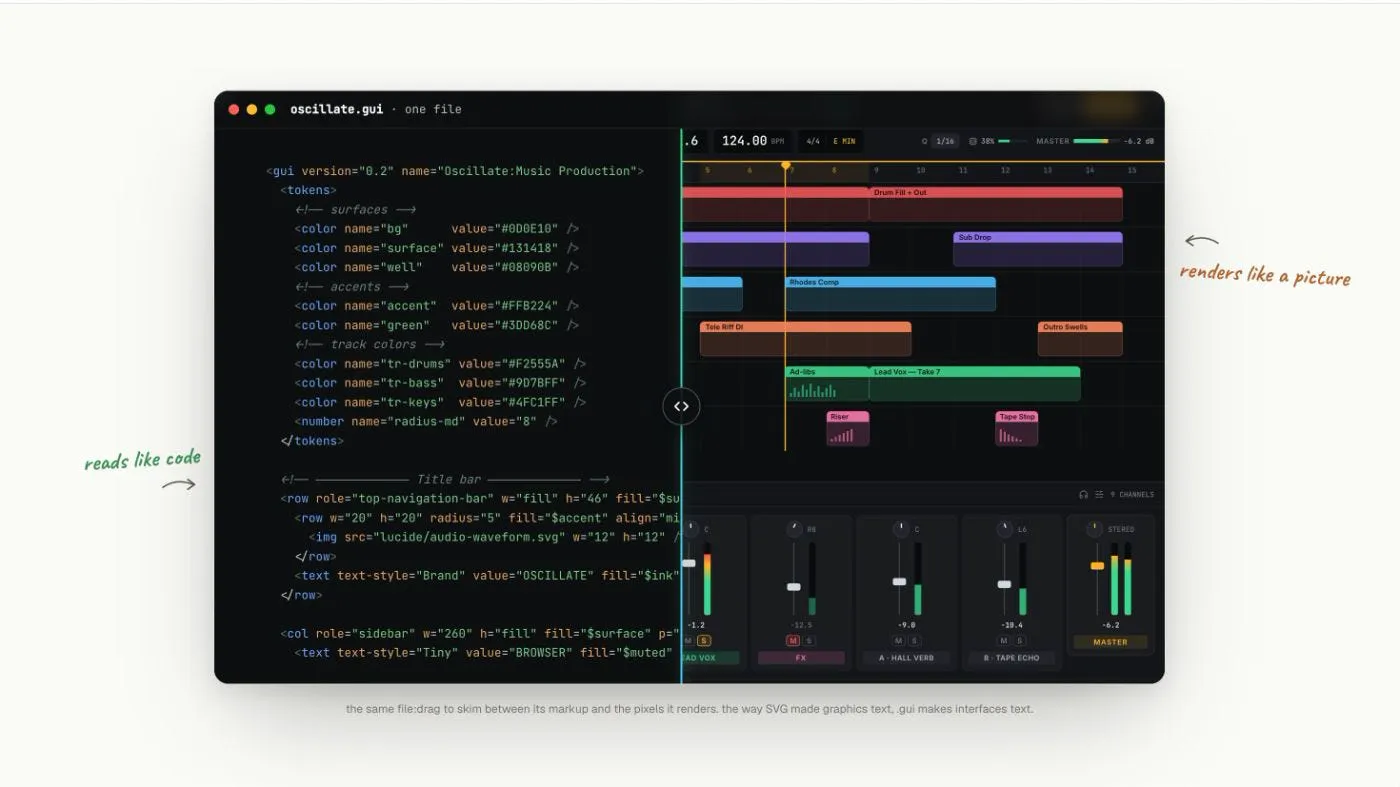
.gui: a new open UI artifact designed as a bridge between visual design, AI systems and implementation code.

This is a summary. The full article lives on Bootcamp, where it was first published.

Read the full article on Bootcamp